

Spain and Portugal remain underexplored by institutional investors seeking recovery, yet Spain's courts have already delivered billions in compensation through mass claims like Bankia and the preference shares litigation. With Portugal's legal framework now bolstered by EU-driven reforms, both Iberian jurisdictions deserve a closer look when significant portfolio losses arise from misconduct or regulatory failures.
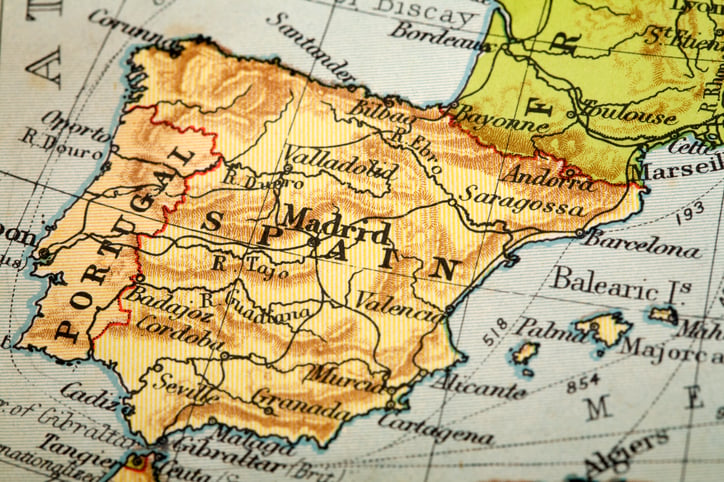
When institutional investors scan the European landscape for shareholder and bondholder recovery opportunities, the usual suspects dominate the conversation: the Netherlands, England and Germany. Each has earned its place through mature procedural frameworks, specialist courts, and a growing body of precedent. Yet two Iberian neighbours, Spain and Portugal, deserve far closer attention. Spain has already demonstrated, through waves of mass retail-investor litigation, that its courts can deliver meaningful recoveries at scale. Portugal, for its part, possesses the structural toolkit for collective investor proceedings but has seen remarkably little use of it. That imbalance may not last.
Spain: A Reactive Mass Claims Jurisdiction
Spain's track record in large-scale investor disputes is more substantial than many market participants appreciate. Two episodes in particular illustrate both the strengths and the distinctive character of the Spanish litigation environment.
The Bankia IPO Litigation (2011–2016)
Bankia's July 2011 initial public offering became one of the most contentious capital-markets events in modern Spanish history. Barely a year after listing, the bank restated its accounts, revealing that the rosy financial picture presented to investors at the time of the IPO bore little resemblance to reality. The share price collapsed, and Bankia was eventually nationalised. What followed was a torrent of individual and group claims brought by retail investors who alleged that the IPO prospectus was materially misleading.
Spanish courts proved receptive. Thousands of judgments were handed down across the country, with the vast majority finding in favour of investors and ordering the return of the sums invested plus interest. The Supreme Court's own rulings confirmed that the prospectus had contained serious inaccuracies, effectively settling the liability question and accelerating the resolution of outstanding claims. By the time the litigation cycle wound down around 2016, Bankia and its successor entities had paid out billions of euros in compensation. Moreover, on 3 June 2021, the European Court of Justice resolved that institutional investors are entitled to claim compensation for the losses they suffered in Bankia’s 2011 public listing.
The Bankia experience revealed several important features of Spain as a recovery jurisdiction. First, the courts were willing to engage with complex financial-product mis-selling on a mass basis. Second, although Spain does not have a single, Dutch-style collective settlement mechanism, its judiciary handled the volume through a combination of individual proceedings, test cases, and coordinated judicial guidance. Third, the time to resolution, while not instantaneous, was broadly comparable to equivalent proceedings elsewhere in Europe.
The Preference Shares Litigation (2012–2018)
Overlapping with the Bankia saga, a second wave of mass investor claims swept through the Spanish courts. During the pre-crisis years, a number of Spanish banks—including Bankia itself, but also entities such as NCG Banco, Catalunya Banc, and several cajas—had sold complex hybrid instruments, often marketed as "participaciones preferentes" (preference shares), to retail customers. Many of these buyers were elderly, financially unsophisticated depositors who had little understanding of the subordination and loss-absorption features embedded in the products they had been sold.
When the financial crisis struck and the instruments suffered severe write-downs or became illiquid, tens of thousands of investors turned to the courts. The resulting litigation, which ran roughly from 2012 to 2018, produced a consistent line of judicial decisions declaring that the products had been mis-sold, that the banks had failed in their obligations to inform and to assess client suitability, and that the affected investors were entitled to rescission of the contracts and return of their capital.
The preference shares litigation reinforced the impression that Spain is, at its core, a reactive mass claims jurisdiction. The procedural infrastructure for these claims was not purpose-built in advance. Rather, the courts responded to a crisis-driven surge in filings, and the legal system adapted, imperfectly but effectively, to deliver outcomes. For litigation funders, the lesson is clear: when a sufficiently large investor harm materialises in Spain, the judiciary has both the willingness and the capacity to process claims at scale, even without a dedicated collective redress statute.
Portugal: Structurally Capable, Largely Untested
Portugal presents a strikingly different picture. On paper, its legal system offers several avenues for collective or group litigation. The Portuguese popular action (acção popular), codified in Law No. 83/95, allows associations and groups of citizens to bring proceedings in defence of collective interests, including those of investors and consumers. Portuguese civil procedure also permits joinder and consolidation mechanisms that could, in principle, accommodate multi-party investor claims. And Portugal's securities legislation imposes duties of disclosure and prospectus accuracy that are broadly aligned with European standards, providing a substantive basis for recovery claims.
Despite this structural capability, Portugal has seen very little investor litigation of the kind that has become commonplace in Spain, the Netherlands, or Germany. The reasons are partly cultural (there is no strong tradition of adversarial shareholder activism in Portugal) and partly practical. Legal costs, the pace of proceedings, and uncertainty about how untested procedural mechanisms would operate in practice have all contributed to a cautious approach on the part of investors and their advisers.
BES / Novo Banco: A Case Study in Unrealised Potential
The collapse of Banco Espírito Santo (BES) in 2014 was, by any measure, one of the most dramatic bank failures in European history. The resolution of BES and the creation of the bridge institution Novo Banco left thousands of bondholders, shareholders, and retail investors nursing significant losses. Subsequent controversies—over the transfer of certain liabilities back from Novo Banco to the "bad bank," over the role of the Portuguese central bank, and over the treatment of different creditor classes—only added fuel to investor grievances.
One might have expected the BES affair to trigger a wave of litigation comparable to Spain's Bankia experience. It did not. While some proceedings have been launched, including actions before Portuguese courts and arbitration claims, the scale of litigation has been modest relative to the size of the losses. This is not because the merits are weak; serious questions remain about the adequacy of disclosure, the conduct of the resolution, and the treatment of retail investors. Rather, the gap reflects the broader structural underuse of Portugal's litigation and collective redress tools.
For the litigation funding community, the BES / Novo Banco situation is both a cautionary tale and an opportunity. It demonstrates that significant investor losses can arise in Portugal without triggering the kind of systematic recovery effort that would be routine in other European jurisdictions. At the same time, it highlights the latent potential of the Portuguese system: the legal tools exist, the substantive claims are viable, and the losses are real.
Looking Ahead: Why This Might Change
Several developments suggest that the Iberian litigation landscape, and Portugal's in particular, may be on the verge of a shift.
First, the European Union's Representative Actions Directive, which member states were required to transpose by mid-2023, creates a harmonised framework for collective consumer and investor actions [JK1] [PC2] across the EU. Portugal's transposition of this directive, by means of Decreto-Lei n.º 114-A/2023, de 5 de dezembro, addresses some of the procedural uncertainty that has historically discouraged group litigation, providing a clearer pathway for qualified entities to bring representative claims on behalf of affected investors.
Second, the litigation funding market itself is maturing in southern Europe. As funders develop deeper expertise in Iberian legal systems and build relationships with local counsel, the practical barriers to launching and managing large-scale claims in Spain and Portugal are falling. The success of funded proceedings in other European jurisdictions provides a template that can be adapted to the Iberian context.
Third, there is a growing recognition among institutional investors that recovery is not limited to the jurisdictions with the most established track records. Portfolio losses arising from misconduct or regulatory failures in Spain and Portugal are no less real than those occurring in London or Amsterdam, and the economic case for pursuing recovery is often just as compelling.
Conclusion
Spain has already earned its place on the map of European investor recovery jurisdictions, even if it is sometimes overlooked in favour of its northern neighbours. Its courts have shown, through the Bankia and preference shares episodes, that they can handle mass investor claims effectively and deliver meaningful outcomes. Portugal, by contrast, remains a jurisdiction of untapped potential, structurally equipped for collective investor litigation but yet to see that potential fully realised. The BES / Novo Banco saga illustrates both the scale of the opportunity and the gap between what the legal system permits and what investors have so far pursued.
For institutional investors, the message is straightforward. It is not that Spain and Portugal will replace the Netherlands, England or Germany as recovery forums. It is that Iberian losses should not be screened out too early. Spain has already shown that mass investor recovery can work in practice. Portugal remains less tested, but its legal framework and recent EU driven reforms make it a jurisdiction that deserves closer monitoring when significant investor harm arises.
[JK1]Does this cover in Portugal also institutional actions? Or more “consumer investor actions” or “retail investor actions”?
[PC2]Decree-Law No. 114-A/2023 is specifically aimed at the protection of the collective interests of consumers, not at the protection of investors (whether institutional or retail) in the strict sense of securities law